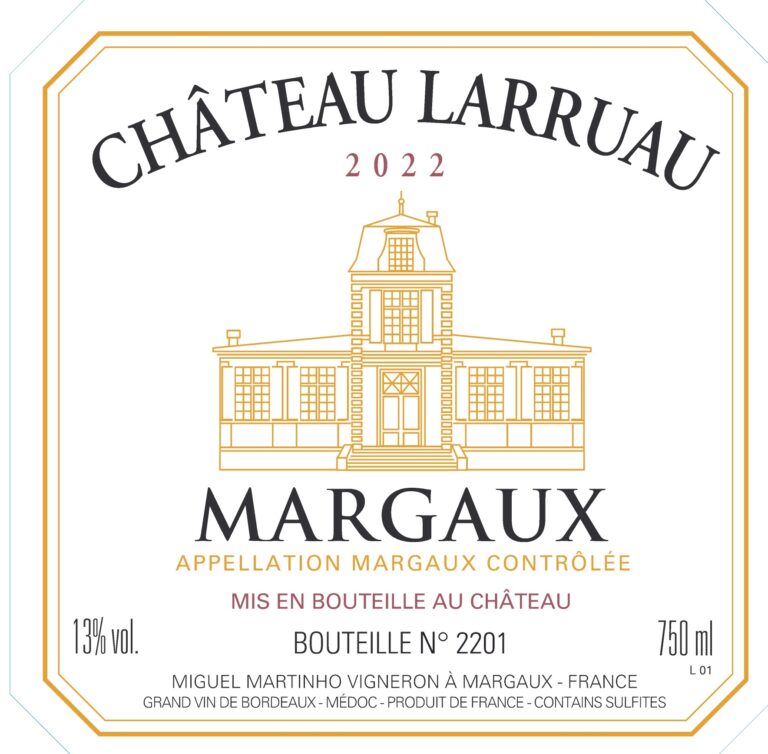
2022 Chateau Larruau
Overview:
A story of patient reconstruction and a Margaux estate on the rise. Château Larruau was born from the historic Château Dubignon Talbot, a 3rd Growth recognized in the 1855 Classification before being divided and dispersed over the generations. In the 1970s, Bernard Château undertook the formidable task of rebuilding the estate around what remained of his family’s vineyard, ultimately assembling twelve hectares of exceptional terroir in the heart of Margaux. In 2019, he entrusted management to his close friend Miguel Martinho, a respected wine entrepreneur, who brings precision and organic farming principles to every parcel. The vineyard sits among the appellation’s greatest names — with a significant portion bordering Château Margaux itself — drawing complexity from the diverse gravel, silt, clay, and limestone soils that define the Margalais terroir. A rising star quietly joining the ranks of Margaux’s elite, and a beautiful expression of one of Bordeaux’s most prestigious appellations.
Bob's Review:
Wow! Big, generous fruit that I like a lot — this is a really well-made, beautifully balanced wine. It drinks effortlessly and shows the kind of craftsmanship that makes a wine a pleasure from first sip to last. Drink now or hold for five to ten years, but can lay down for longer.
Additional Details:
Grape Varieties: Not specified in producer materials (Margaux is traditionally Cabernet Sauvignon-led with Merlot, Petit Verdot, and sometimes Cabernet Franc)
Wine Region: Margaux AOC
Soil: A diverse mix of gravel, silt, clay, and limestone — representative of the multiple nuances of the Margalais terroir
Additional Details:
- 12-hectare estate spread across 35 individual parcels in the heart of Margaux
- Significant portion of the vineyard borders Château Margaux (First Growth)
- Origins trace back to Château Dubignon Talbot, classified as a 3rd Growth in the 1855 Classification
- Estate rebuilt by Bernard Château beginning in 1971 and renamed Larruau in 1980
- Currently managed by Miguel Martinho, who also owns Château Martinho
- Farmed according to organic principles with precision viticulture
- Intensive manual vineyard work, including shoot thinning, leaf removal, and green harvesting